Best Counseling Programs in California (2026)
Top CACREP-accredited counseling programs in California for 2026, with tuition, LPCC licensure requirements, the California-specific course content, NCMHCE and Law and Ethics prep, and the 3,000 supervised hours you'll need to practice independently.

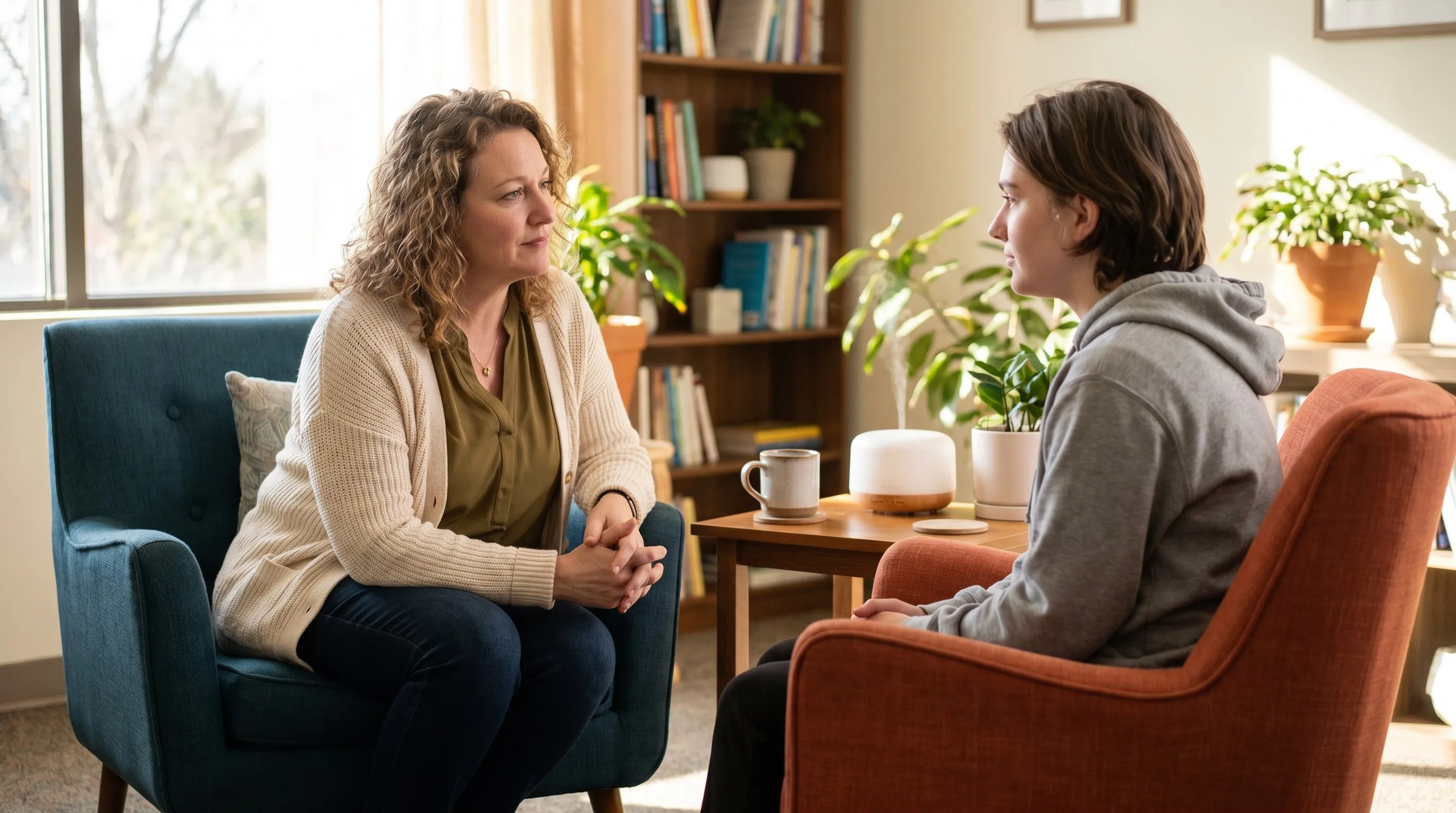
Key Takeaways
- California has roughly two dozen CACREP-accredited counseling programs, including public anchors at Cal State Fullerton, Cal State LA, Cal State Fresno, Cal State San Bernardino, San Francisco State, San Diego State, plus private options at USD, Palo Alto University, Concordia Irvine, and Alliant International. CACREP-accreditation is not strictly required for LPCC eligibility in California, which is why the state has fewer CACREP programs than Texas or Florida.
- Becoming an LPCC in California takes a 60-semester-unit (or 90-quarter-unit) master's covering 13 core content areas plus 15 advanced units, then 3,000 post-degree supervised hours over a minimum of 104 weeks (2 years) and a maximum of 6 years, with 1,750 hours of direct counseling, then passing both the California Law and Ethics Exam and the NCMHCE.
- California requires ten additional California-specific course content areas beyond core coursework, including human sexuality (10 hours), spousal/partner abuse (15 hours), child abuse assessment (7 hours), aging and long-term care (10 hours), cross-cultural counseling (15 hours), suicide risk assessment (6 hours), recovery-oriented care, alcoholism and chemical dependency, telehealth (3-hour one-time), and psychopharmacology. CACREP programs in California build these in. Out-of-state graduates fill the gaps after the fact.
- California is a Counseling Compact member state. Once you hold an active California LPCC, the Compact (operational rollout 2025) lets you practice across other Compact states without applying for separate licenses. California is not part of PSYPACT, which only applies to psychologists.
- License fees drop substantially soon. Initial LPCC licensure and biennial renewal are currently $200 and $220 respectively, but effective July 1, 2026 through June 30, 2030, both fees are reduced by 50% to $100. If you can time your initial license to fall in that window, you save real money.
- Scope-of-practice quirk: California LPCCs cannot diagnose or treat couples and families by default. To formally authorize couples and family treatment, you must complete specific MFT-aligned coursework, 500 documented supervised hours working directly with couples, families, or children, and 6 CE hours in MFT every renewal cycle (per AB-462, effective Jan 1, 2022).
- California pays among the highest counselor wages in the country in nominal terms, but the cost-of-living math is real. Bay Area metros (San Francisco, San Jose) and major Southern California metros (LA, San Diego) pay top quartile wages, while the Central Valley and rural counties pay materially less and have severe mental health shortages.
- California offers one of the most generous state loan repayment programs in the country. The HCAI Medi-Cal Behavioral Health Student Loan Repayment Program covers up to $120,000 for licensed non-prescribing providers (including LPCCs) committing to 4 years at a Medi-Cal-serving site, with the 2026 application deadline of May 29, 2026.
- School counseling and clinical counseling are different jobs on different calendars. California school counselors carry a whole-school caseload on an academic year and are certified by the education agency, not the California Board of Behavioral Sciences. The 3,000-hour supervised requirement above does not apply. See accredited school counseling programs.
California licensed its first LPCCs in 2012, making it the last state in the country to formally license professional counselors. For decades before that, the LMFT credential (which California created in 1963 as the first MFT licensure in the U.S.) carried most clinical mental health work. That history shapes the California landscape today: LMFT is the older, more widely held credential, but the LPCC has stronger out-of-state portability through the Counseling Compact and aligns better with national CACREP standards. Many California programs offer both tracks under one roof, letting students decide based on practice goals rather than path-dependency.
Three things make California licensure distinct from any other state. First, the California-specific course content requirements (10 additional content areas on top of core coursework, totaling specific hour minimums in human sexuality, child abuse, suicide, telehealth, and more) mean that out-of-state graduates always have coursework gaps to fill after moving here. CACREP-accredited California programs build all of this in. Second, the scope-of-practice limit on couples and family treatment: by default, LPCCs cannot treat couples or families, requiring 500 documented supervised hours plus MFT coursework plus ongoing CE in MFT to authorize that scope. This is unique to California and you should plan around it from program selection forward. Third, the upcoming fee reduction from July 1, 2026 through June 30, 2030, cutting initial license and biennial renewal fees by 50 percent to $100 each.
The licensing path itself: you complete a 60-unit accredited master's covering the LPCC core 13 content areas plus 15 advanced units, register as an Associate Professional Clinical Counselor (APCC) within 90 days of graduation, accumulate 3,000 post-degree supervised hours over at least 104 weeks (and no more than 6 years) with 1,750 hours of direct counseling, take the California Law and Ethics Exam each APCC year until you pass, and finally take the NCMHCE once your supervised experience is complete. Plan for roughly 3 to 4 years from master's graduation to full LPCC.
CACREP-Accredited Counseling Programs in California
All 11 programs ranked in this guide, with tuition, format, and accreditation at a glance.
| # | School | In-State Tuition | Format | Length |
|---|---|---|---|---|
| 1 | California State University, Fullerton | ~$8,635/year (~$480/credit on full-time load) | On-campus | |
| 2 | California State University, Los Angeles | ~$8,635/year (~$480/credit on full-time load) | On-campus | |
| 3 | San Francisco State University | ~$9,150/year (~$508/credit on full-time load) | On-campus | |
| 4 | San Diego State University | ~$8,800/year (~$489/credit on full-time load) | On-campus | |
| 5 | University of San Diego | ~$1,725/credit (private, flat rate) | On-campus | |
| 6 | Palo Alto University | ~$1,535/credit (private, flat rate) | On-campus | |
| 7 | California State University, Fresno | ~$8,150/year (~$453/credit on full-time load) | On-campus | |
| 8 | California State University, San Bernardino | ~$8,355/year (~$464/credit on full-time load) | On-campus | |
| 9 | Concordia University Irvine | ~$1,005/credit (private, flat rate) | On-campus | |
| 10 | Alliant International University (California School of Professional Psychology) | ~$1,235/credit (private, flat rate) | On-campus and online | |
| 11 | Hope International University | ~$795/credit (private, flat rate) | On-campus and hybrid |
California State University, Fullerton
In-State
~$8,635/year (~$480/credit on full-time load)
Out-of-State
~$20,515/year
Length
2.5 to 3 years (60 credits)
Field Hours
700+ (100 practicum + 600 internship)
Concentrations
- CACREP-accredited dual-track program (CMHC and MFT) lets students pursue both California credentials
- Curriculum builds in all California-specific course content for LPCC eligibility
- CSU public university tuition keeps total program cost under $25,000 for in-state students
- Located in Orange County with placements at OC Health Care Agency, Western Youth Services, and Hoag Health
- Cohort-based admission with established alumni network across Southern California
California State University, Los Angeles
In-State
~$8,635/year (~$480/credit on full-time load)
Out-of-State
~$20,515/year
Length
3 years (60 credits)
Field Hours
700+ (100 practicum + 600 internship)
Concentrations
- CACREP-accredited program with evening course schedules built around working adults
- Three concentrations under one program: CMHC, School, and Rehabilitation Counseling
- Hispanic-Serving Institution with strong faculty representation in bilingual and culturally-responsive practice
- Located in East LA with placements throughout the LA County Department of Mental Health system
- CSU tuition keeps program affordable for LA-area residents committed to staying local
San Francisco State University
In-State
~$9,150/year (~$508/credit on full-time load)
Out-of-State
~$21,030/year
Length
3 years (63 semester units)
Field Hours
700+ (100 practicum + 600 internship)
Concentrations
- CACREP-accredited 63-unit MS dually focused on Clinical Rehabilitation and Mental Health Counseling
- Dual-track preparation gives graduates eligibility for both LPCC and CRC (Certified Rehabilitation Counselor)
- Strong placements with Bay Area community mental health centers, UCSF, and Bay Area Veterans Affairs
- Faculty research in disability counseling, integrated primary care, and culturally-responsive practice
- CSU tuition keeps Bay Area program cost competitive despite high regional living expenses
San Diego State University
In-State
~$8,800/year (~$489/credit on full-time load)
Out-of-State
~$20,680/year
Length
3 years (60 credits)
Field Hours
700+ (100 practicum + 600 internship)
Concentrations
- CACREP-accredited MS designed to meet California LPCC course content requirements in full
- Located near Naval Medical Center San Diego and VA San Diego, with placement variety across military and civilian behavioral health
- Strong faculty engagement with cross-border mental health practice (San Diego-Tijuana region)
- Bilingual practice emphasis given San Diego County demographics
- CSU tuition makes program among the most affordable in Southern California
University of San Diego
In-State
~$1,725/credit (private, flat rate)
Out-of-State
~$1,725/credit (private, flat rate)
Length
2.5 to 3 years (60 credits)
Field Hours
700+ (100 practicum + 600 internship)
Concentrations
- CACREP-accredited MA in Counseling with separate CMHC and School Counseling tracks
- Private Catholic-rooted but non-sectarian curriculum welcoming students of all faiths or none
- Located in San Diego with strong placement relationships across the region
- Small cohort sizes for closer faculty mentoring
- Higher tuition offset partly by merit scholarships and graduate assistantships
Palo Alto University
In-State
~$1,535/credit (private, flat rate)
Out-of-State
~$1,535/credit (private, flat rate)
Length
2.5 to 3 years (60 credits)
Field Hours
700+ (100 practicum + 600 internship)
Concentrations
- CACREP-accredited MA in Counseling with strong faculty research record
- Located in the heart of Silicon Valley with placements across Bay Area community mental health and Stanford-affiliated sites
- Strong doctoral pipeline (PsyD and PhD on the same campus) for students considering future doctoral work
- Curriculum integrates technology and digital mental health practice content
- Hybrid delivery option for students balancing graduate work with employment
California State University, Fresno
In-State
~$8,150/year (~$453/credit on full-time load)
Out-of-State
~$19,990/year
Length
3 years (60 credits)
Field Hours
700+ (100 practicum + 600 internship)
Concentrations
- CACREP-accredited program serving the Central Valley's severe mental health workforce shortage
- Three concentrations under one program: CMHC, School, and MFCC
- Strong bilingual and Spanish-language counseling emphasis given Central Valley demographics
- Placements at Fresno County Behavioral Health, Community Behavioral Health Center, and rural CV community mental health
- Among the most affordable CACREP programs in California at CSU public university pricing
California State University, San Bernardino
In-State
~$8,355/year (~$464/credit on full-time load)
Out-of-State
~$20,235/year
Length
3 years (60 credits)
Field Hours
700+ (100 practicum + 600 internship)
Concentrations
- CACREP-accredited program serving the Inland Empire region's growing mental health workforce demand
- Three concentrations: CMHC, School, and Career Counseling
- Hispanic-Serving Institution with strong bilingual practice emphasis
- Placements at San Bernardino County Department of Behavioral Health and regional community mental health centers
- CSU public university tuition keeps total program cost under $25,000 for in-state students
Concordia University Irvine
In-State
~$1,005/credit (private, flat rate)
Out-of-State
~$1,005/credit (private, flat rate)
Length
2 to 3 years (60 credits)
Field Hours
700+ (100 practicum + 600 internship)
Concentrations
- CACREP-accredited MA in Counseling: Clinical Mental Health, 60-unit program
- Flexible delivery with on-campus and hybrid course options
- Faith-integrated curriculum without requiring religious affiliation from students
- Located in Orange County with placements at OC Health Care Agency and major regional employers
- Strong cohort support model for students balancing graduate work with employment
Alliant International University (California School of Professional Psychology)
In-State
~$1,235/credit (private, flat rate)
Out-of-State
~$1,235/credit (private, flat rate)
Length
2.5 to 3 years (60 credits)
Field Hours
700+ (100 practicum + 600 internship)
Concentrations
- CACREP-accredited MA in Clinical Counseling at the Fresno campus, within the California School of Professional Psychology
- Strong doctoral pipeline through the CSPP for students considering future PsyD work
- Multiple California campus locations across Alliant's system (San Francisco, Sacramento, Los Angeles, San Diego, Fresno)
- Bilingual and culturally-responsive practice emphasis
- Online delivery option available for students outside the Central Valley
Hope International University
In-State
~$795/credit (private, flat rate)
Out-of-State
~$795/credit (private, flat rate)
Length
2.5 to 3 years (60 credits)
Field Hours
700+ (100 practicum + 600 internship)
Concentrations
- CACREP-accredited MA in Counseling at a smaller private institution
- Faith-integrated curriculum reflecting Hope International's Christian university roots
- Located in Orange County with placements at OC Health Care Agency and regional Christian counseling centers
- More affordable private option than Concordia or USD at $795/credit flat rate
- Smaller cohort sizes for closer faculty mentorship
LPCC Licensure Requirements in California
The licensing board, exam pathway, and supervised hours you'll need to practice independently.
Licensing Board
California Board of Behavioral Sciences (BBS)
(916) 574-7830
California regulates LPCCs, LMFTs, LCSWs, and LEPs through one combined board: the California Board of Behavioral Sciences (BBS). The BBS structure means LPCCs share regulatory bandwidth with three other professions, which can slow rule cycles, but the combined oversight is comparatively well-resourced compared to states with smaller boards.
You'll move through two stages in California. First, the Associate Professional Clinical Counselor (APCC), which is the pre-license registration that authorizes supervised post-graduate practice. You must register within 90 days of master's graduation. Second, the full LPCC, earned after completing 3,000 supervised hours over a minimum of 104 weeks and passing both the California Law and Ethics Exam and the NCMHCE.
The California-specific requirements run deep. Beyond the standard CACREP core, California mandates 10 additional content areas: human sexuality (10 hours), spousal/partner abuse assessment and intervention (15 hours), child abuse assessment and reporting (7 hours), aging and long-term care (10 hours), California cultures and cross-cultural counseling (15 hours), suicide risk assessment and intervention (6 hours), mental health recovery-oriented care, alcoholism and chemical dependency, a one-time 3-hour telehealth course, and psychopharmacology. CACREP-accredited California programs build all of this in. Out-of-state CACREP graduates fill the gaps after arriving in California.
Associate Professional Clinical Counselor
Supervised post-master's practice while accumulating hours toward LPCC
Hours
N/A
Duration
Associate
Exam: California Law and Ethics Exam (taken in first APCC year, retaken annually until passed)
Licensed Professional Clinical Counselor
Independent clinical practice, mental health diagnosis and treatment, private practice. Couples and family treatment requires additional MFT coursework, 500 supervised hours with couples/families, and 6 CE hours in MFT every renewal cycle.
Hours
3,000
Duration
104 weeks (2 years), maximum 6 years
Exam: California Law and Ethics Exam + NCMHCE
California does not offer automatic reciprocity. Out-of-state LPCs moving to California apply through the Portability of License to California process. Requirements vary based on how long you've been licensed and what your original master's program covered. Most out-of-state applicants need to complete California-specific course content (the 10 mandated content areas above) before licensure can be issued.
California is a member of the Counseling Compact, with rollout beginning in 2025. Once you hold an active California LPCC, the Compact lets you practice telehealth or in-person across other Compact member states without applying for separate state licenses. California is not part of PSYPACT, which is the psychology-only interstate compact and does not apply to LPCCs.
Mental Health Counselor Salary in California
BLS state median wages by counseling specialty, with national comparison and top-paying metros.
California pays among the highest counselor wages in the country in nominal terms. The BLS May 2024 California OEWS estimates place California in the top quartile nationally for the combined substance abuse, behavioral disorder, and mental health counselor category, with median annual wages roughly $74,000 statewide. Where California salaries get complicated is the geographic spread. The Bay Area and major Southern California metros pay top-quartile wages but require top-quartile cost of living. The Central Valley and rural counties pay materially less and have severe shortages. Plan around where you actually want to live and practice.
Substance Abuse, Behavioral Disorder, and Mental Health Counselors
National median: $59,190
Top metro: $95,210 (San Francisco-Oakland-Hayward)
Mental Health Counselors (excluding substance abuse)
National median: $59,610
Top metro: $89,640 (San Jose-Sunnyvale-Santa Clara)
Marriage and Family Therapists
National median: $63,780
Top metro: $78,420 (San Francisco-Oakland-Hayward)
Educational, Guidance, and Career Counselors (School Counselors)
National median: $64,210
Top metro: $86,940 (Los Angeles-Long Beach-Anaheim)
California Counseling Job Market and Workforce
Major employers, mental health shortage context, and loan repayment programs that erase debt for service.
California has the largest behavioral health workforce in the country by raw count and one of the most lopsided by geography. The state's major metros (San Francisco-Bay Area, Los Angeles, San Diego, Sacramento) are well-staffed and competitive for jobs, while the Central Valley, far-northern counties (Modoc, Trinity, Siskiyou), and Imperial County face severe shortages and active recruitment incentives. Per HRSA HPSA data, the bulk of mental health HPSAs in California are concentrated in rural and inland counties where caseloads are high and wages are lower in nominal terms but go further given regional cost of living.
Major employers include Kaiser Permanente (one of the largest behavioral health employers in the state with embedded counselors across all Kaiser facilities), Sutter Health, Dignity Health, UCLA Health and the broader UC health system, LA County Department of Mental Health, San Francisco Department of Public Health, county behavioral health departments statewide, the VA Greater Los Angeles Healthcare System and other regional VAs, and a heavy private practice and group practice sector concentrated in Bay Area and Southern California metros.
Three workforce dynamics shape practice in California:
Bilingual demand: California has the largest Spanish-speaking population of any state, with significant Mandarin, Cantonese, Tagalog, Vietnamese, and Korean-speaking communities as well. Multilingual LPCCs and LMFTs command premium caseloads and faster ramp-up.
Behavioral Health Services Act (BHSA) funding: California voters reformed the Mental Health Services Act into the Behavioral Health Services Act in 2024, which significantly expanded substance use treatment funding starting in 2026. This creates new counselor positions across county behavioral health departments and contracted community providers.
Rural recruitment incentives: The Central Valley and Far North counties offer some of the most generous loan repayment terms in the country through HCAI programs, specifically because they cannot otherwise attract licensed providers at competitive rates.
Loan Repayment & Scholarship Programs
HCAI Medi-Cal Behavioral Health Student Loan Repayment Program (MBH-SLRP): Part of California's BH-CONNECT Workforce Initiative. Licensed non-prescribing providers including LPCCs, LMFTs, LCSWs, and licensed psychologists are eligible for up to $120,000 over a 4-year service commitment at a Medi-Cal-serving site. Licensed prescribing providers (psychiatrists, NPs) qualify for up to $240,000. The 2026 application deadline is May 29, 2026 at 3:00 PM.
Licensed Mental Health Services Provider Education Program (LMHSPEP): Additional HCAI-administered loan repayment program specifically for licensed mental health providers committing to service in underserved areas of California.
California State Loan Repayment Program (SLRP): Federally-seeded, HCAI-administered program for licensed health professionals including LPCCs serving in California HPSAs.
NHSC Loan Repayment Program: Federal program. LPCCs are eligible. Up to $50,000 for 2 years full-time service at an NHSC-approved site in a designated HPSA, or up to $25,000 for half-time.
Federal Public Service Loan Forgiveness (PSLF): LPCCs employed at California state agencies, county behavioral health departments, VA hospitals, UC health systems, and nonprofit health systems all qualify for federal PSLF after 10 years of qualifying payments under an income-driven repayment plan.
How to Choose a Counseling Program in California
Decision factors that actually matter, not generic checklist filler.
Choosing a counseling program in California is more complex than in most other states because California has fewer CACREP-accredited programs than its size would suggest, the LPCC and LMFT credentials cover overlapping but distinct scopes of practice, and the geography of supervision pipelines matters enormously. Here's how to actually narrow it down.
If you want maximum California portability: Choose a CACREP-accredited California program. CACREP-accredited California programs build in all 10 California-specific content areas, which means you graduate ready to register as an APCC without any course gaps. Cal State Fullerton, Cal State LA, Cal State Fresno, SF State, SDSU, and USD are the strongest CACREP options on this dimension.
If cost is the deciding factor: CSU public universities (Fresno, San Bernardino, LA, Fullerton, SDSU, SF State) all charge roughly $8,000 to $9,200 per year in-state, which works out to under $25,000 total tuition for a 60-credit program. Private CACREP options (USD, Palo Alto, Concordia, Alliant) run two to three times that.
If you want dual LPCC + LMFT eligibility: Cal State Fullerton's dual-track CMHC/MFT program is purpose-built for this. Otherwise, look for programs offering separate MFT coursework as electives that you can layer on top of your CMHC core. Be honest with yourself about whether you actually need both credentials, because the additional supervised hours required for couples and family practice (500 hours minimum) are real.
If you want maximum flexibility: Palo Alto University, Concordia Irvine, and Alliant International all offer hybrid or online delivery options. Cal State LA runs evening-only courses. All programs still require in-person practicum and internship hours at approved California sites.
If you want Bay Area placement pipelines: SF State, Palo Alto University, and Alliant San Francisco all have established placement relationships with UCSF, Kaiser, Stanford-affiliated sites, and the broader Bay Area community mental health network.
If you want LA-area placement pipelines: Cal State LA, Cal State Fullerton, USD (San Diego), and Alliant LA all serve the LA County Department of Mental Health network and the major Southern California health systems.
If you want Central Valley placement and loan repayment opportunities: Cal State Fresno, Alliant Fresno, and CSU San Bernardino serve regions with the most severe shortages and the most generous HCAI loan repayment terms. Salaries are lower in nominal terms but cost of living is materially lower too.
If you want bilingual practice training: Cal State LA, FIU's Bay Area counterparts, SF State, USD, Cal State Fresno, and Cal State San Bernardino all serve communities where Spanish-language practice is in heavy demand and integrate this into coursework.
If you plan to leave California after graduating: CACREP accreditation is essential for portability. Once California issues your LPCC, the Counseling Compact lets you practice across other Compact states (more than 30 states and growing) without applying for separate state licenses. Verify Compact membership for your target state at counselingcompact.org.
Related Pages
Best Online Counseling Programs
National ranking of the top CACREP-accredited online counseling programs
Best Online Master's in Psychology
If you're still weighing psychology vs counseling at the master's level
Counselor Career Guide
What LPCCs and LMFTs actually do day-to-day
MSW Programs in California
If you're weighing the social work pathway instead
ABA Programs in California
For students considering behavior analysis as an alternative path
Sources
- CACREP, Directory of Accredited Programs
- California Board of Behavioral Sciences (BBS)
- BBS, Licensed Professional Clinical Counselor (LPCC)
- BBS, LPCC Handbook
- BBS, Portability of License to California
- Bureau of Labor Statistics, Substance Abuse, Behavioral Disorder, and Mental Health Counselors
- Bureau of Labor Statistics, OEWS California Estimates (May 2024)
- NBCC, National Clinical Mental Health Counseling Examination (NCMHCE)
- Counseling Compact, Member States
- HCAI, Medi-Cal Behavioral Health Student Loan Repayment Program
- HCAI, Loan Repayment Programs Overview